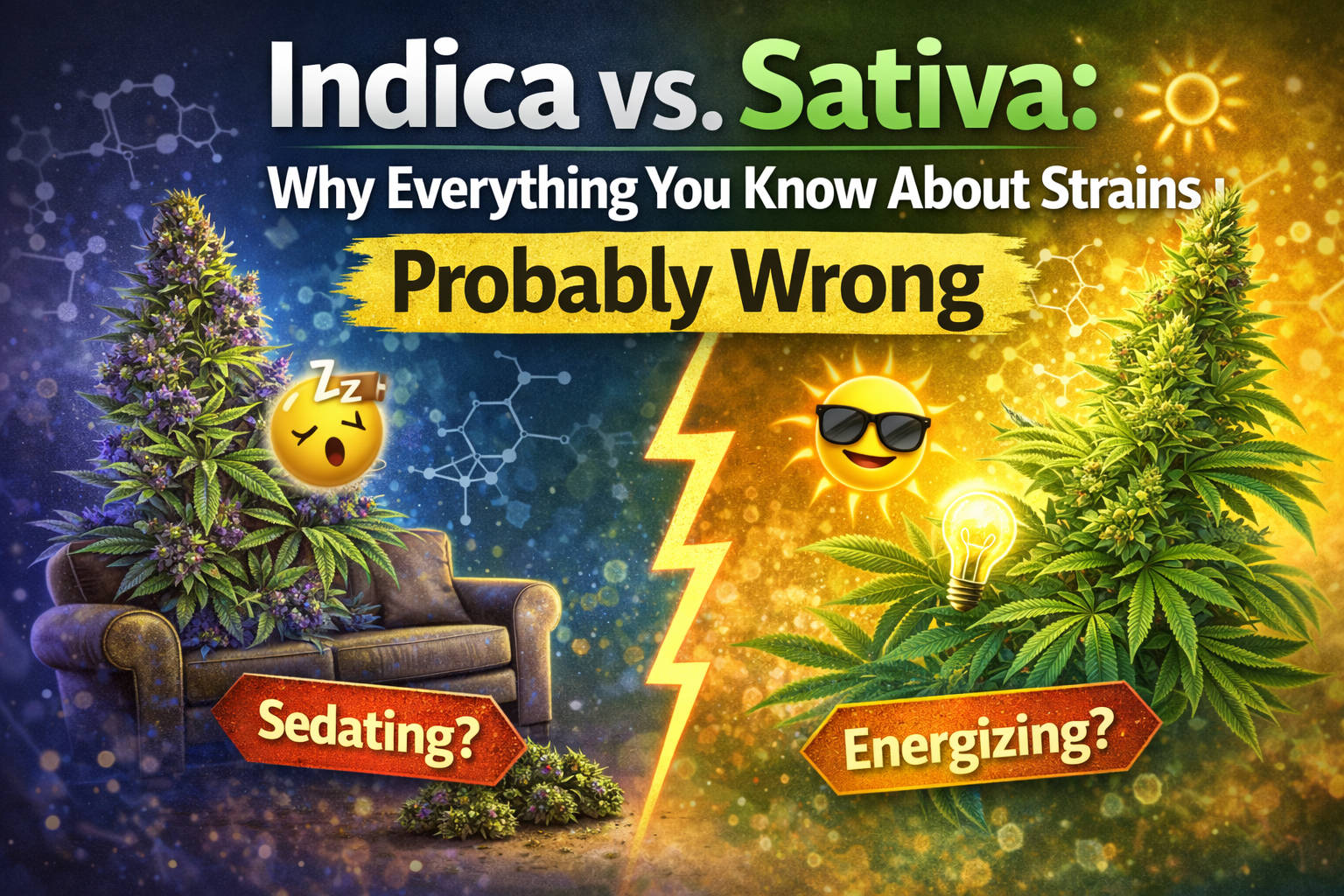
Walk into any legal cannabis dispensary, and the menu will be strictly divided into two main categories: Indica and Sativa.
The “budtender” will tell you that Sativas provide a bright, energetic, creative high for the daytime. Then, they will tell you that Indicas are heavy, sedating, and will leave you locked to your couch (“Indica = In Da Couch”).
As someone who relies on hard botanical data, I have to be candid with you: this system is scientifically flawed, and it is largely a marketing myth.
The Botanical History of Cannabis
The terms Cannabis sativa and Cannabis indica were coined by botanists in the 18th century. They were not describing the effects of the plant on the human brain; they were describing what the plants physically looked like and where they grew.
Sativa plants evolved in warm, equatorial climates. Because of the heat, they grew incredibly tall and lanky with thin leaves to prevent mold. Indica plants evolved in the harsh, cold mountains of the Middle East (like the Hindu Kush). To survive the cold, they grew short, dense, and bushy with broad leaves.
Today, almost everything on the market is a hybrid. A 100% pure Sativa or Indica is incredibly rare.
Terpenes: The True Drivers of Your High
So, if Sativa and Indica don’t dictate how a strain makes you feel, what does? The answer lies in the Entourage Effect—specifically, the combination of Cannabinoids and Terpenes.
Terpenes are the essential oils of the plant. They give cannabis its unique smell, whether it’s citrus, pine, skunk, or berry. But they actively steer the direction of your high.
- Myrcene: Smells earthy and musky. Acts as a muscle relaxant and makes you feel sleepy.
- Limonene: Smells like lemon peels. Elevates your mood and makes you feel energetic.
A plant might physically grow short and bushy like an Indica, but if its genetic profile is packed with Limonene, it will give you an energetic “Sativa-like” high. The next time you buy cannabis, smell the flower. Your nose will usually tell you exactly what kind of experience you are about to have.
Reliable Source: Leading neurologist and cannabis researcher Dr. Ethan Russo published extensive peer-reviewed data on the National Library of Medicine debunking the Indica/Sativa myth, proving pharmacological effects are strictly tied to terpenes and cannabinoids.
Fun Fact: The terpene Pinene (which smells like a pine forest) has been shown in studies to help counteract the short-term memory loss often associated with getting high on THC!
 hempcentral
Comments